
Get Professional Help
+91 7077081918/ 8917242982

Water When You Need It, Powered by the Sun
For farmers and rural communities, pumping water often means high diesel costs or unreliable electricity. A solar water pump removes that worry. It uses sunlight to run the pump, so you get water during the hours when the sun is strongest, which is also when it is most needed for irrigation.
Dia Solar installs solar dual pump systems for farms, orchards, gardens, village water supply and small commercial use. Once set up, your running cost is close to nothing.
What Makes a Dual Pump Useful
Our solar dual pump setup is designed to give you flexibility. It runs on solar power during the day and can be arranged to work with an additional power source where required, so your water supply is less dependent on weather and timing alone. This is helpful for places that need water even on low-sunlight days.
We select the pump capacity based on your water source, depth, required discharge and daily usage, because a mismatched pump wastes money and wears out quickly.
Installation That Is Built for Field Conditions
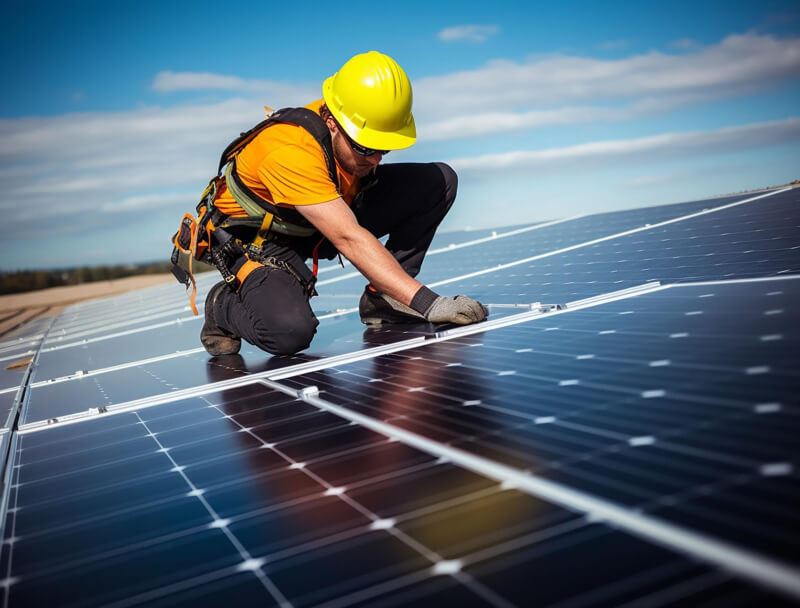
Our team studies your borewell, open well or water source before recommending the right system. We then set up solar panels on a sturdy structure, connect the pump and controller, and test the flow before handing over. The panels are positioned to get maximum sunlight through the day.
We also explain simple things like cleaning the panels and checking connections, so you can look after the system yourself between service visits.
Benefits of Solar Energy

Almost Zero Running Cost
No diesel, little or no electricity bill for pumping.

Works in Remote Areas
Useful where power lines are weak or missing.

Flexible Dual Operation
Added reliability for days with less sunlight.

Suited to Irrigation
Peak sunlight matches peak watering hours.

Simple to Operate
Easy day-to-day use with minimal handling.

Eco-Friendly Water Supply
No fuel smoke, no noise from generators.
Frequently Asked Questions
A solar pump works mainly in daylight. Water is usually pumped during the day and stored in a tank for use later.
It refers to a pump setup that can work on solar power and also be arranged to use another power source where needed, for added flexibility.
In most cases yes. We check the depth and water level first to choose the right pump size.
Light dust cleaning every week or two helps keep output high, especially in dusty or dry seasons.